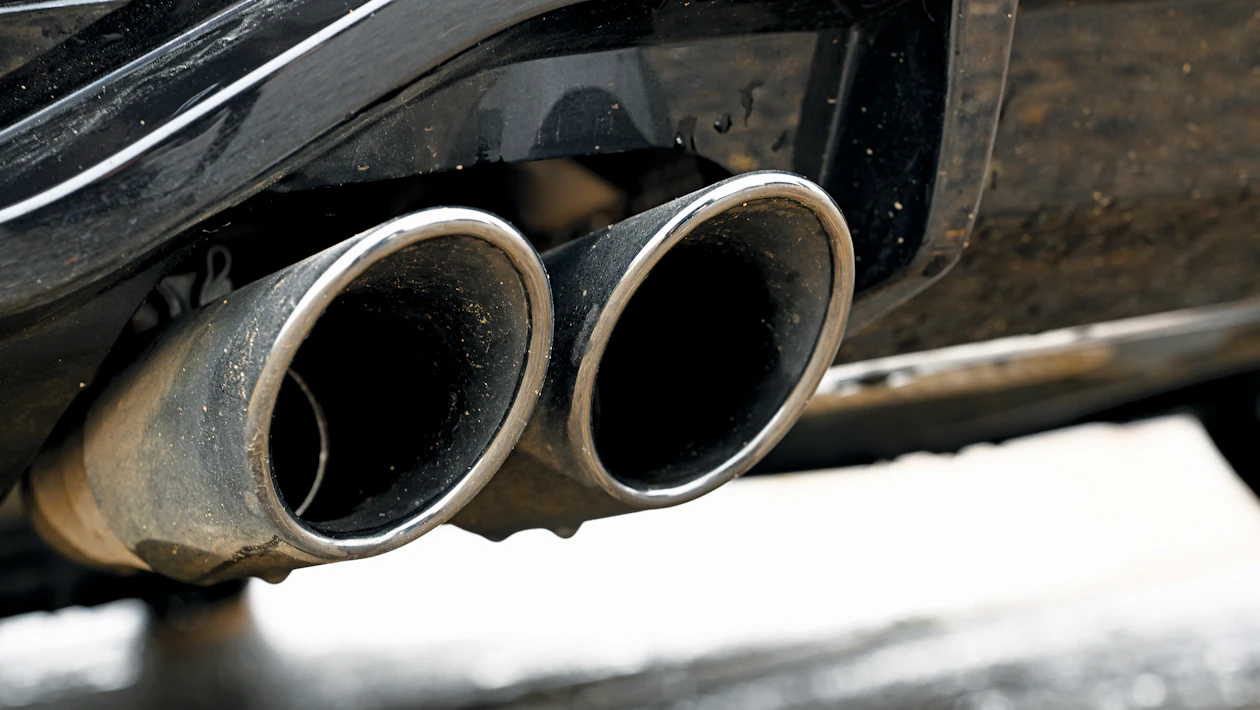
For starters, Euro 7 cars will be tested in temperatures of up to 45 degrees celsius, as well as in stop-start traffic and on short journeys. This, experts believe, will give a more rounded and accurate perspective on a vehicle’s real-world emissions.
Speaking of which, Euro 7 will also, for the first time, limit the amount of particulates a car can produce from its brakes and tyres. Hybrids, plus petrol and diesel cars, will be limited to seven milligrammes of particulate matter per kilometre, versus 3mg for EVs; due to their regenerative braking systems, electric cars tend to use their brakes less, hence the stricter limit.
Finally, Euro 7 is designed to protect the longevity of new cars. Emissions control systems, such as catalytic converters, must be effective for up to 10 years and 200,000km – double the previous limit – while EV batteries must retain at least 80 per cent of their original capacity after five years or 100,000km. Onboard diagnostics systems must also monitor emissions in real time and notify the driver if something goes wrong and the car begins exceeding legal requirements.
All of this is due to the fact that nitrogen oxide, as well as other pollutants and particulate matter, are detrimental to both the environment and human health. A report by the Centre for Research on Energy and Clean Air estimated that between 2009 and 2015, excessive levels of particulate matter caused around 124,000 premature deaths.
The introduction of these new regulations won’t be immediately noticeable to consumers; manufacturers have been slowly preparing for Euro 7 since its announcement in November 2022. However, this won’t be the end, because you can expect a Euro 8 standard to arrive in a few more years' time as the rules surrounding electrification become tougher.
Get the latest car news in your inbox, for FREE! Sign up to the Auto Express email newsletter...