While all-wheel drive isn’t an option here, the E-Transit does come with the choice of either a 68kWh Standard Range or 89kWh Enhanced Range battery pack. The smaller unit returns up to 196 miles on the WLTP combined cycle, while the bigger one bumps this up to 249 miles. These official numbers will vary depending on your chosen spec, though, and the E-Transit is available in a very wide variety of specifications, just like the diesel model.
Naturally, vehicle downtime isn’t ideal for any business, so both batteries are capable of taking on a DC rapid charge. However, the speeds vary depending on your chosen pack. The 68kWh unit can handle a rate of up to 115kW, and this means a 10 to 80 per cent top-up will take around 37 minutes. The 89kWh pack is faster at 180kW, and this means you’ll only face a 28-minute wait, despite this battery’s larger capacity.
If, like many EV drivers, you’re plugging in for a full zero to 100 per cent charge from a typical 7.4kW wallbox, you’ll need to wait for around nine hours for the 68kWh battery, rising to 12 hours for the 89kWh unit.
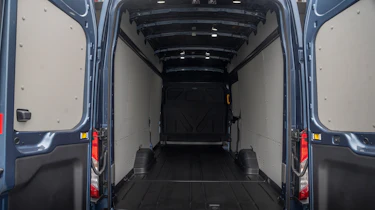
There’s definitely a version of the Ford Transit that will suit your business
|
|
The Transit range is vast. There are panel vans, chassis cabs, drop-side trucks and minibuses. The vans offer gross vehicle weights from 2.9 tonnes to 5.0 tonnes in the Transit Jumbo and load volumes from 9.6 cubic metres to 15.1 cubic metres. Some of the Transit’s rivals go up as far as 17 cubic metres, though, so that’s one area where the Ford falls slightly short.