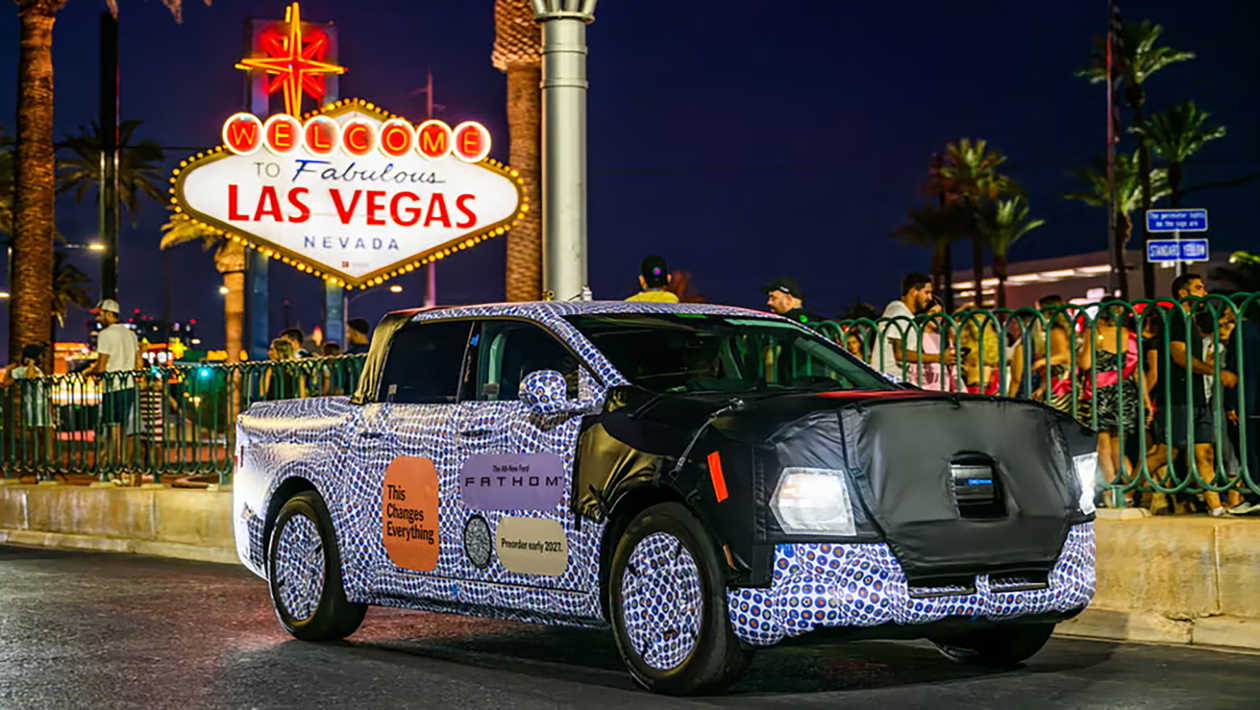
Three examples of aerodynamic optimisation have already been detailed, starting with an aerodynamic bed cover in a teardrop shape that’ll significantly reduce high-speed drag. More compact door mirrors, with a one-piece mechanism that is similar to those seen on new Volvos and Polestars, shrink the size by 20 per cent without minimising the glass area, and unlock another 1.5 miles of range.
Finally, the underbody fixings have shallower mounting holes and flush heads, and there are new wind deflectors that push air around the rear wheels to reduce under-body turbulence – these are all small changes, but amount to another 4.5 miles saved.
The second is an introduction of Tesla-style megacastings, which reduce complexity around large, complicated parts for the chassis, such as the front bulkhead and axle. Ford says the Maverick, its current ICE-powered mid-sized pick-up, has 162 structural components in this area. The new EV version? Just two.
How will Ford build the new Fathom?
Ford will also create a new manufacturing process, after inventing the production line with the Model T 122 years ago. The new car will be built in a tree-like manufacturing process, with substantial sub-assemblies being made on separate lines before joining up at the end for final assembly.
Ford is hoping this new way of building cars won’t just be relevant to its US operations, but to all its global manufacturing. This innovation also expands to the lithium iron phosphate (LFP) battery packs, which will be manufactured in a new battery plant in Detroit, with Ford promising that it’ll be able to achieve the same range with one-third less capacity. This has other benefits including less weight, lower material costs and better efficiency.
The entire platform is designed to be flexible and practical, but it’ll go beyond just a new pick-up truck. Ford will eventually expand this new architecture to include a number of family SUVs, crossovers and commercial vans. If you’re in the market for a pick-up, or any electric car, check out the Auto Express Buy A Car service for all the latest deals.
The US brand will also integrate V2H (vehicle-to-home technology), which will be able to power your home in a black-out for up to six days from the car’s battery. This might be a niche benefit for somewhere like the UK, but is increasingly important to American customers.