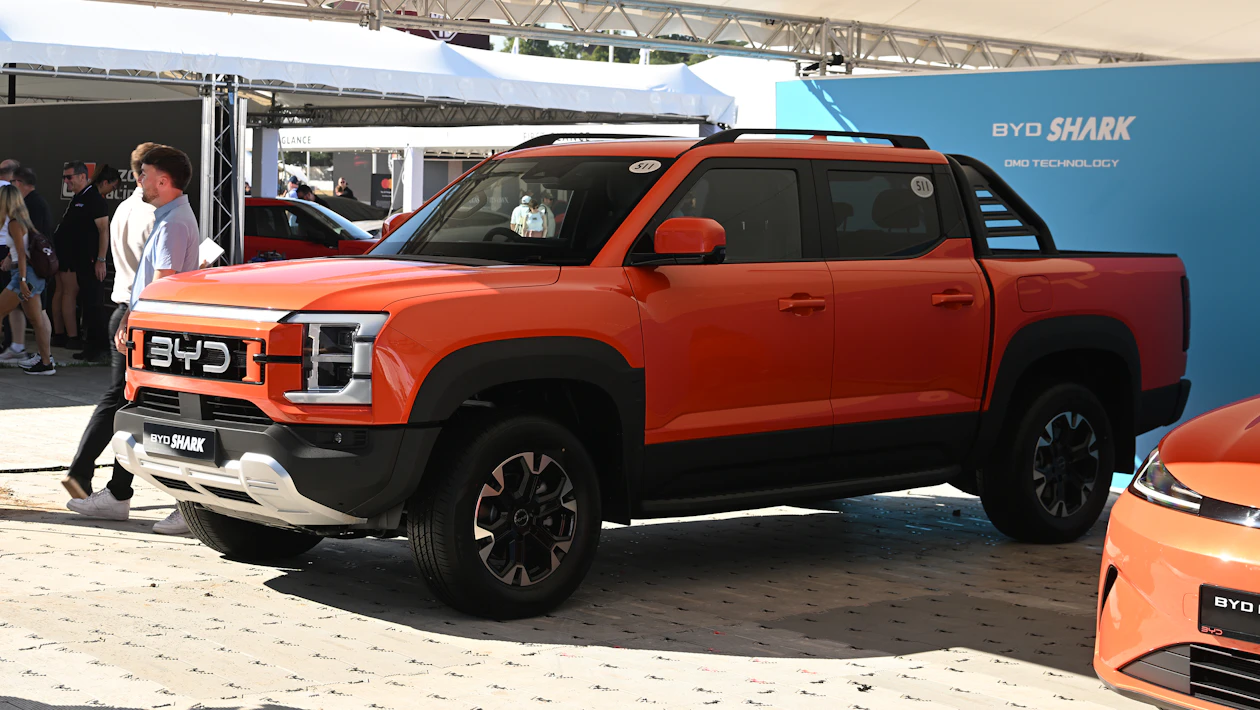
The combined power figure is far higher than we’ve come to expect in this type of car. With 435bhp on tap, the Shark can do 0-62mph in just 5.7 seconds, and thanks to a sizeable 29.58kWh battery, it can also cover up to 55 miles on pure-electric power. For comparison, the Ranger PHEV delivers 275bhp and just 27 miles of EV range.
There’s also DC fast charging at up to 55kW, which is capable of refilling the battery from 30 to 80 per cent in 21 minutes.
However, this system has its limitations when it comes to load capacities. Its maximum load capacity and towing capacity are not competitive with those of the Ranger PHEV. The BYD is capable of towing 2,500kg and has a payload of 790kg, whereas the Ford can haul up to 3,500kg and lug around 1,000kg in the bed. This is also why the BYD isn’t eligible for a VAT refund for business users, but the DMO system does have other advantages.
The Shark’s zero-emissions driving abilities, combined with CO2 emissions of 46g/km, could make it an appealing left-field choice for company car drivers, especially with double-cab pick-up trucks no longer classified as commercial vehicles. So instead of paying a flat tax rate of £792 per year, these types of trucks are now classed as private vehicles.
As a result, their CO2 emissions dictate which Benefit-in-Kind (BiK) band they land in. That’s why the traditional diesel-powered Ford Ranger and Volkswagen Amarok attract the maximum 37 per cent company car tax rate, while the Ranger PHEV falls into the 20 per cent band. The more efficient BYD Shark could fall into an even lower band, although not as low as the Hilux BEV, which sits in the 4 per cent band.
Convincing Ford Ranger customers to try something new
In 2025, BYD’s UK deputy country manager, Steve Beattie, told Auto Express that he was keen to get the Shark onto UK shores. That’s in part because of the recent changes to how pick-up trucks are taxed, plus he’s confident it will steal sales away from the Ford Ranger.
“[The pick-up truck] market is dominated by the Ranger, and Ford does an incredible job with that. What's interesting is the market has just changed for that vehicle because it was effectively a company car tax break, but [trucks] are now being classed as cars.
“So, ultimately, all of those diesel [pick-up truck drivers] now have to move to something that is either plug-in hybrid or electric, and this being plug-in hybrid I think is going to fit really well.
“It’s also just something different,” he added. “We've seen that with Tesla Model 3 customers and Model Y customers – they say ‘I've had this for a while, I want to change into something different’ and that gives us an opportunity. Now for those Ranger customers, we’ll have an alternative here.”
Our dealer network has 1,000s of great value new cars in stock and available now right across the UK. Find your new car…