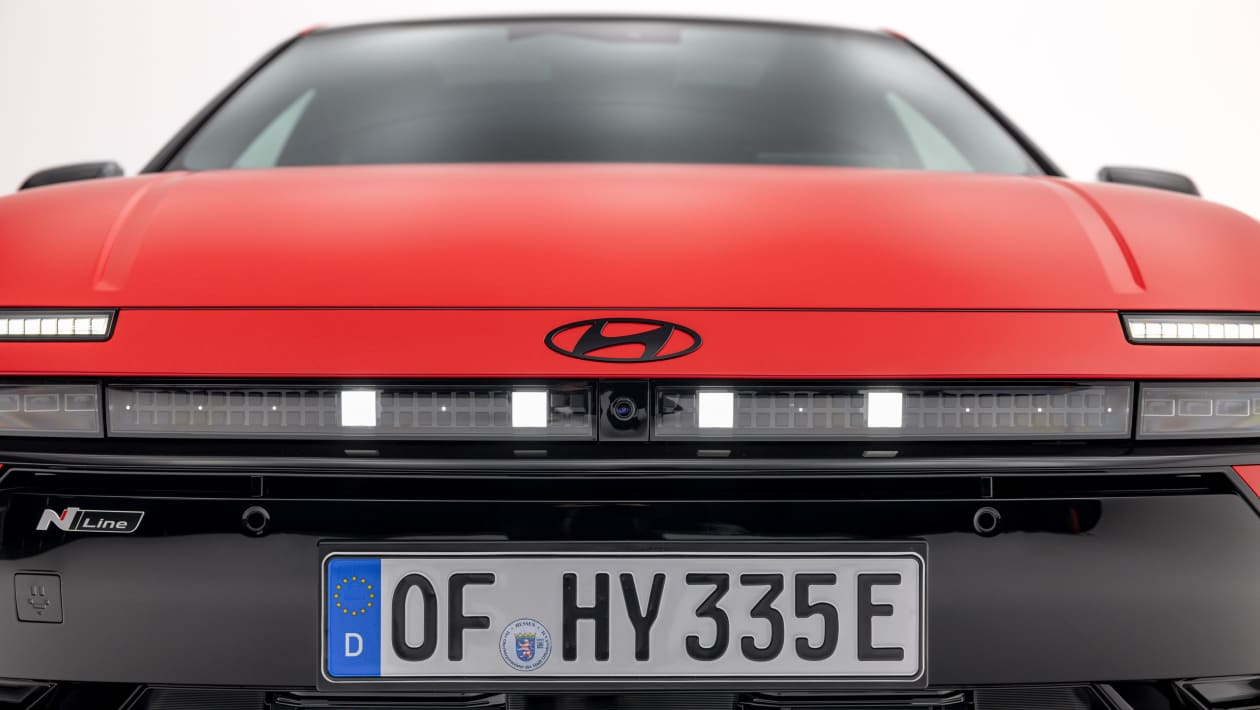
While McKinnon was keen to reiterate that “Kona is in [the] space” that this future Ioniq 4 will occupy, it’s expected that the third-generation model will lose its all-electric powertrain option, and as a result won’t be offered in the UK.
Pricing for the Ioniq 4 will also need to remain competitive with a new glut of similarly sized EVs such as the Skoda Epiq and Renault 4, suggesting a starting price of around £25,000 – some £2,500 more than the entry-level Ioniq 3.
New Hyundai Ioniq 7: family-friendly SUV to sit between 5 and 9
Sitting between the Ioniq 5 and 9 will be a new family-friendly two-row or occasional three-row SUV. This model will sit closer to the 5 in terms of price and size, but will have a boxier shape to offer a more versatile interior. While there has been no official information about the newcomer’s name, Ioniq 7 is a strong candidate and would fit neatly with what we’re expecting to see.
Given its size and eventual price point, this new model will almost certainly include an 800V architecture that’ll keep it competitive in the fast-moving electric-SUV class. It’ll offer single and dual-motor layouts, but it’s still too early to know specifics such as battery sizes and range projections – although it’ll need to muster at least 400 miles on a charge to keep up with the competition.
This will also be one of the new Hyundai models to incorporate the next generation of design and digital interfaces, including the new Pleos infotainment system and a further evolution of the design language featured on the Ioniq 3.
In terms of positioning, the Ioniq 7 will be priced just above its Ioniq 5 sibling, leaving some space above for the three-row and more premium-focused Ioniq 9. This would suggest a starting price of between £45,000 to £50,000 in the UK, with high-spec dual-motor variants still leaving a gap to the Ioniq 9’s base price of just under £65,000.
If you’re in the market for a new Hyundai with any powertrain, check out the Auto Express Buy a Car service now for all the latest deals...