2023 MG
22,773 miles
2021 Vauxhall
30,903 miles1.2L
2024 Citroen
4,595 miles1.2L
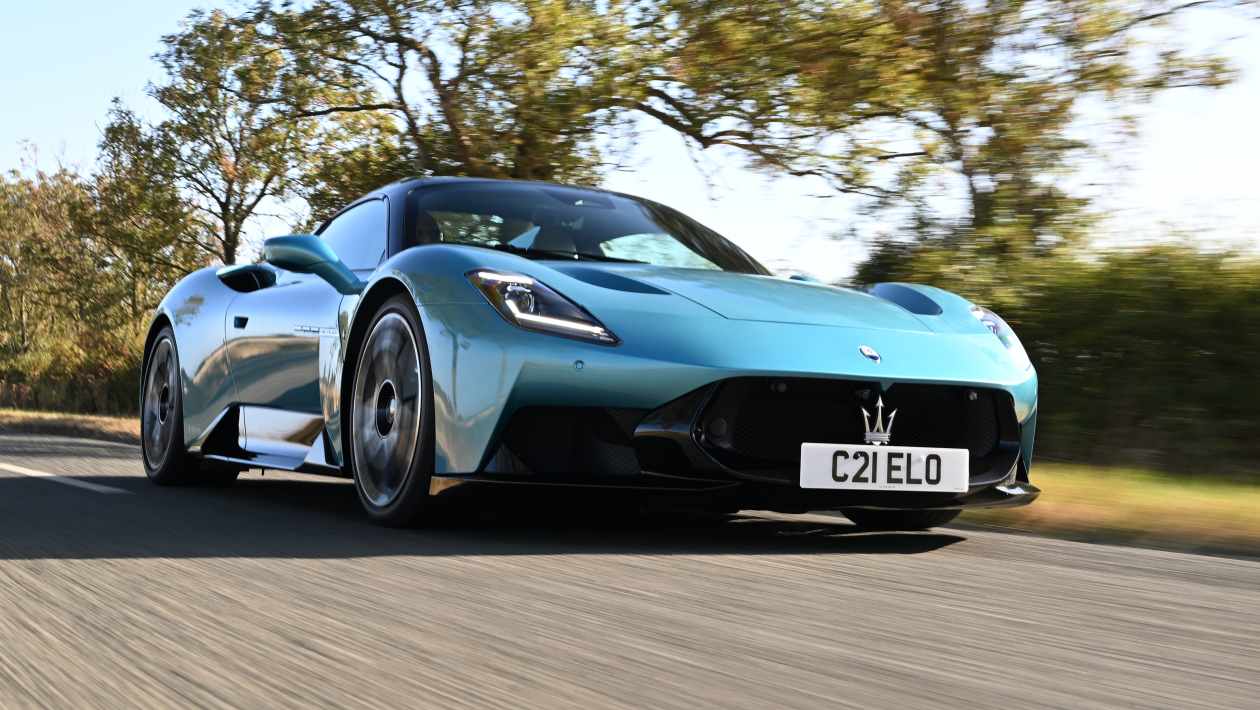
While the MCPura looks elegant and sophisticated, the engine is savage in its delivery. It fires up with a bassy rumble that can set off car alarms if you’re parked close to another vehicle, while switching between different drive modes adjusts the intensity of its idle speed, giving clues as to how the car will perform.
In GT mode, the MCPura has a docile edge that befits the grand touring tag. The adaptive dampers are able to smooth out rough roads, although a McLaren Artura manages to do even better in this regard. But the character of the engine means the MCPura doesn’t remain refined for very long. Use anything but a light throttle, and the turbos spool up with a whoosh, while lifting off delivers significant wastegate chatter, too.
In Sport mode, the MCPura offers a sharper edge, with a firmer ride and quicker throttle response. Change gears using the tactile steering wheel paddles, and each ratio slams home with a jolt, while the engine roars way behind you. Corsa delivers an even more visceral response, with each shift coming with a punch in your back. But whichever mode you choose, the MCPura simply rockets off the line.
Fast steering offers pinpoint precision in corners, while the chassis delivers plenty of grip. The car’s snappy responses and rear-drive layout mean the back end feels lively, especially when you’re tackling a twisty British B-road, where the car’s stiff chassis has a tendency to buck around over bumps. However, the quick rack helps to keep on top of things. In many ways, the MCPura delivers a driving experience that’s fairly unique in the realm of supercars these days. The lack of hybrid assistance means it simply delivers raw speed and the kind of responses that only a powerful petrol engine can muster. Dropping the excellent folding hard-top simply gets you a front-row seat to the engine’s drama, or you can lower the rear window to do the same.
A price tag nudging £230,000 is steep, while our test car had another £60,000 worth of options, including £18,000 for the AI Aqua Rainbow paint, £7,000 for the white Alcantara seats and £9,500 for a matt-painted trident logo on the engine cover. But when a Ferrari 296 GTS starts from £280,000 and a Lamborghini Temerario is £260,000, the Maserati offers an old-school driving experience that will appeal to enthusiasts.
We’d like to see some improved quality in places, though. While draping the cabin in Alcantara adds a sportier touch, some of the switchgear feels low-rent for a supercar. The rotary dial that’s used to pick the drive modes feels as flimsy as a gear selector in a Chinese SUV, while the ritual you have to undertake when stopped to ensure the car is in park feels unnecessary. Rear visibility is non-existent, too: the engine cover and wide rear arches obscure most of your view at the back, although a standard-fit rear view camera helps.
However, many of these issues are quickly forgiven when you push the starter button and hear that Nettuno V6 bark back into life.
| Model: | Maserati MCPura Cielo Spyder |
| Price: | £227,070 (£294,995 tested) |
| On sale: | Now |
| Powertrain: | 3.0-litre V6 twin-turbo |
| Transmission: | Eight-speed automatic, rear-wheel drive |
| 0-62mph: | 2.9 seconds |
| Top speed: | 199mph |
| Economy: | 24.1mpg |
| Emissions: | 265g/km |
| Size (L/W/H): | 4,669/1,965/1,217mm |