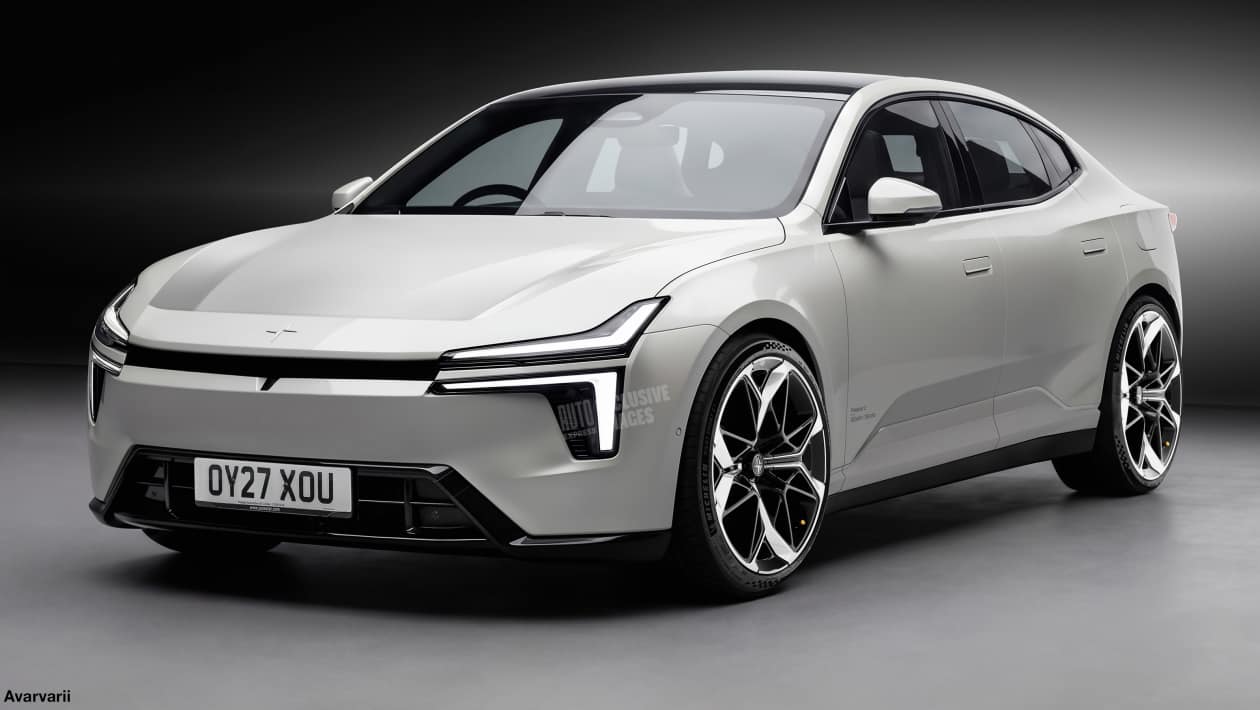
Boss Lohscheller has also railed against the number of car platforms the Swedish EV-maker currently uses: “Over time, I want to harmonise architectures, because we have too many different ones.” The outgoing 2, Polestar’s SUVs and the incoming, all-aluminium 5 performance GT are all based on different vehicle platforms. That’s a luxury for any car maker, let alone one that sold only 60,000 cars in 2025.
But it’s not just about hardware, as car makers embrace the shift to software-defined vehicles (SDVs) knowing that connected features and the onboard digital experience are the new automotive battleground. Lohscheller said: “You need to have [cutting-edge] software stacks and central core computing,” which is the ultrafast-processing power that enables hi-tech safety, autonomous and dynamic features.
He added: “All this can be done, but it needs to be well planned. The companies who have done it, it took them years.”
The CEO confirmed that the new platform has the flexibility to support a variety of vehicles, with different lengths, tracks and wheelbases and suitability for both high and low-riding cars. That will enable the 2 and the 7, the mid-size-SUV that will follow it to market in 2028, to use the same underpinnings. And Römers is incredibly nonchalant about the Geely group’s technological convergence.
“I’m happy that I [arrived at] a time where we want to share platforms and set our brands in clear directions to avoid a horse-race mentality,” said the head of design. “It’s the same in Volkswagen Group: they share platforms but a Volkswagen is completely different to an Audi.”
Prices for the new electric Polestar will likely start at just less than £50,000 when UK sales begin in the summer of 2027 – putting it in the heart of the mid-size executive-car segment, and a surefire rival to the new BMW i3 and Mercedes C-Class Electric.
Find a great deal on a new Polestar 2, 3 or 4 available from stock now through the Auto Express Buy A Car service