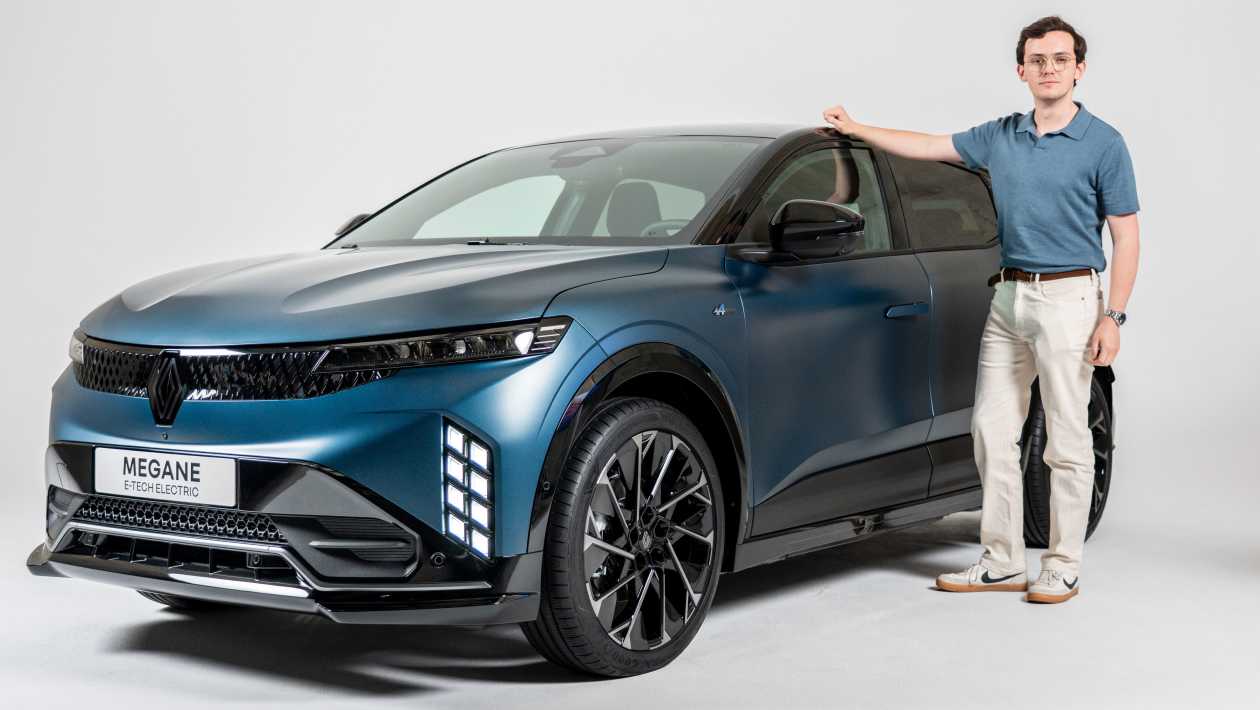
Renault's success with the Renault 5 and Renault 4 means it’s pretty easy to forget about the Renault Megane, but the firm gave its electric family hatchback a thorough update earlier this year and now there’s more good news, because it’s eligible for the Government’s full, £3,750 Electric Car Grant.
The Megane E-Tech had previously been eligible for the Band 2 grant, taking £1,500 off the list price, but with £3,750 off, the Megane now starts at £28,245.
That’s for the entry-level ‘Techno’ trim level, while the range-topping Esprit Alpine starts at £31,245 - that’s almost £5,000 less than the cheapest Megane E-Tech cost when it launched in 2022. Both variants are available to order now.
So what do you get for your money with the Megane E-Tech? As part of the 2026 update, Renault introduced a new Tesla-style Lithium Ferro Phosphate (LFP) battery pack to offer greater range, plus a sleeker, sportier design that draws on cues from the larger Scenic, as well as the new petrol-powered Clio that’s set to arrive next year.
2026 Renault Megane E-Tech: range and charging
That new battery pack is slightly larger than the old car’s 60kWh unit, at 67kWh, and is capable of up to 310 miles on a single charge – 25 miles further than before. In comparison, a Volkswagen ID.3 Neo with the mid-spec 58kWh LFP battery – the closest competitor to the Megane – is rated at 307 miles, while a Kia EV4 will return 273 miles in Standard Range form, but more than 380 miles with bigger batteries fitted.
Dig deeper and you’ll find that the Megane’s LFP unit is technically less efficient than the Nickel Manganese Cobalt (NMC) one it replaces, returning 4.6 miles per kilowatt-hour on the WLTP test cycle, compared with the 4.75 miles of the pre-facelift Megane. Yet the Megane’s product manager, Benjamin Kotlowski, told Auto Express that LFP tech “offers the best ratio between price, range and chargeability”. He added that while the Megane’s increase in range is relatively minor, “our studies show that 500km (300 miles) is the psychological level that customers think ‘okay, this can be my main vehicle’”.