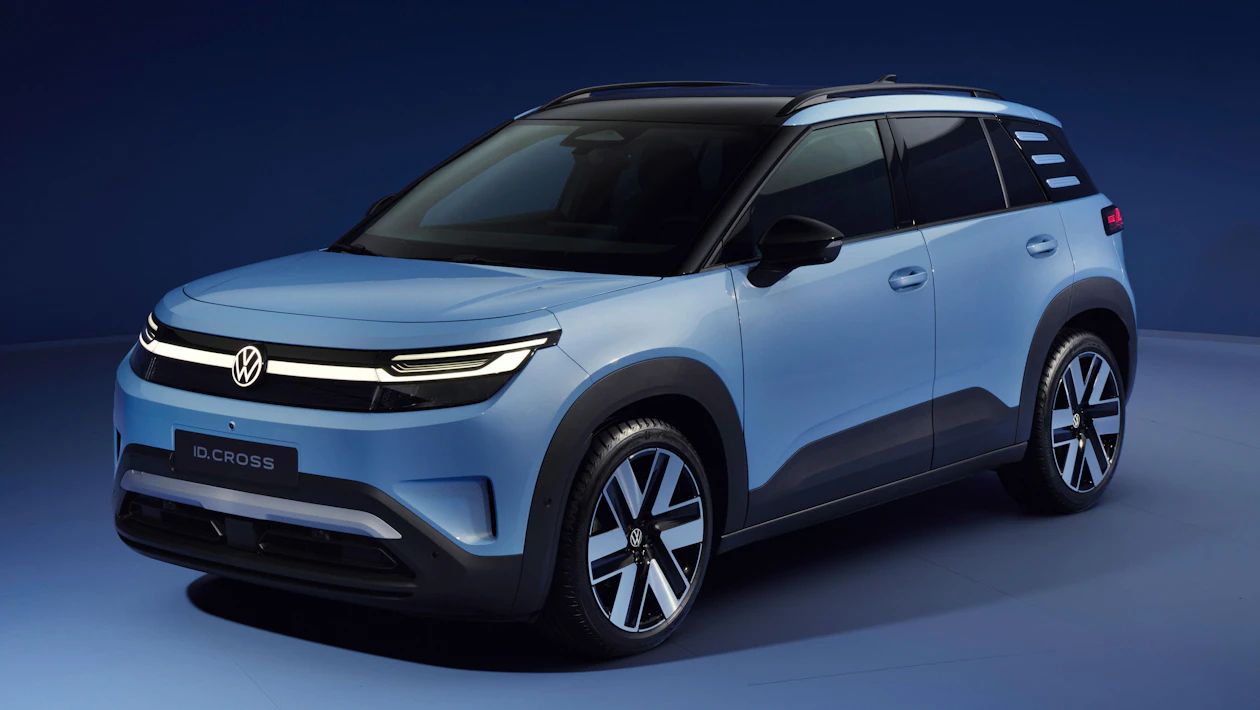
According to a leading car data platform, the base ID. Cross Life with the smaller battery will start at £26,985, while the 52kWh option should start at £30,450 with the Style version of both costing an extra £3,415.
The ID. Polo, which has the same platform, battery and electric motors as the ID. Cross, is eligible for the Government’s £1,500 Electric Car Grant, so further price reductions could be in store for the electric crossover too.
What does the new Volkswagen ID. Cross look like?
The ID. Cross fits squarely into the new ‘True Volkswagen’ strategy, creating classical bodystyles featuring horizontal lines and easily understood names, rather than the more rounded designs of VW’s ID.3 and ID.4, which have been recently facelifted and renamed the ID.3 Neo and ID. Tiguan, respectively. VW CEO Thomas Schafer has told Auto Express that VW got it wrong with the look, unfamiliar names and digital controls of its first mass-market EVs.
The flagship ID. Cross Style model features full-width lightbars front and rear, illuminated VW badges and whisky tumbler-effect 3D tail-lights. “We tried to make the front end resemble a face: the headlamps are eyes above a smile,” said Schrader. That taps into the new VW design strategy of a likeable appearance, visual stability and surprising details. An example of this is the ‘floating’ roof, segmented by the dark middle and rear pillars: the ID. Cross won’t be offered with contrasting roof paint.
New Volkswagen ID. Cross battery, range and power
Under the skin is VW Group’s MEB+ electric car architecture: 80 per cent of components are shared with the other cars in the family – the ID. Polo, Epiq and Cupra Raval – maximising economies of scale and driving down costs. The four cars offer a choice of two standardised batteries: a 37kWh lithium iron phosphate (LFP) pack and a more expensive, more energy-dense 52kWh NMC unit.