


The sense of deja-vu is strong with this one. A facelifted PHEV - one of Europe’s best-selling plug-in hybrid cars, until fairly recently - is sitting in a Scandinavian airport car park, ready for test drive.
This is all eerily familiar. In fact, my smartphone calendar tells me that the last time it happened was as recently as July 2025. Back then, Gothenburg’s revised SUV felt precisely like what it turned out to be: a stopgap. Is this new one more of a step up? More of a new lease? In some ways, yes; though it could still have a long way to go until retirement.
This car will turn a decade old in 2027; so it’s not quite as venerable as the related XC90, but it’s absolutely no spring chicken. Volvo has a history of keeping models around for many years, though, which seems to serve it well: in 2024, more XC60s found owners than in 2018, and it outsold both the BMW X3 and Audi Q5.
Those German rivals have just entered entirely new generations, though, so now it’s up to the XC60 to prove it can keep up; and it's looking to big electric-only range in order to do that.

New Volvo XC60: Driving the UK's longest-range plug-in hybrid

But for some additional refinement measures, the XC60's 2025 facelift mostly omitted anything mechanical; but that’s certainly not true this time around. So, in addition to the usual bumper, bonnet, headlight and cabin material tweaks - yes, more of them, even though we only had some last year - we’ve actually got a couple of new plug-in hybrid powertrains to report on here: which, after the advent of the latest European emissions certification regime, the XC60 will have badly needed in order to stay competitive.
The headline news is that the XC60 ‘plug in’ has gone ‘long range’. Funnily enough, it’s always been a little bit of a freak from a technical point of view; but now it’s as if it’s developed mutant superpowers.
The designers call their latest headlight effort the “deconstructed Thor’s Hammer” (because it’s blockier- and gappier-looking than what went before). Peak designer speak, that. I’m pretty sure the Norse god would have preferred his hammer in one piece.
While contemporary rivals generally have ‘P2’-style motor arrangements (in which the electric motor drives into the same gearbox as the combustion engine, and sits upstream of it), Volvo’s technical PHEV preference - a decision made more than a decade ago, for all cars on the XC60’s ‘SPA’ platform - was for a ‘P4’ configuration; which means the car has its rear axle driven electrically, and its front one chiefly via reciprocating pistons (Volvo's latest PHEV system now has a starter-generator motor adjacent to the engine that can drive the front wheels in 'engine off' running, but it's less than half as powerful as the rear motor and typically it leaves the job of driving the car to the rear motor).

For a while, that P4 configuration made the XC60 look a little bit odd. Now, however, with the latest technical trend in the PHEV class being for ‘gearboxless’ range-extended PHEVs in which the engine seldom drives the wheels at all, and the electric motor doesn’t have the friction of a conventional gearbox to overcome, Volvo’s directly-driven ‘ERAD’ hybrids (electric rear axle drive) suddenly don’t look so silly. Suddenly, they look competitive all over again.
There are two new Long Range PHEVs in the XC60 range, sitting alongside the B5 AWD mild hybrid base model. Both use a new 41.2kWh (nominal) drive battery that fills the space in the transmission tunnel that the firm’s old hybrid battery occupied, but also extends farther under the cabin floor; and which boosts the XC60’s electric range by as much as two-and-a-half times beyond what it used to be.
The less powerful T6 model (351bhp), in entry-level trim, comes with WLTP ‘Equivalent All-Electric Range’ of a very leggy 124 miles - while, in the more powerful T8 (455bhp) and in tandem with top-level ‘Ultra’ equipment, that dips only as far as 115 miles. Both cars get a more powerful rear electric motor than the outgoing PHEVs, rising from 143bhp to 174-, but retaining the same 228lb ft of torque.
That’s not quite enough to get a UK fleet user a five per cent benefit in kind classification for 2027-28 (though it’s painfully close); but it’s a lot more electric range than most rival PHEVs are offering. And it could make an XC60 a viable, worthwhile option for owners who wouldn’t have bothered charging one with only 40- or 50- miles of electric range; as well as an even cheaper-to-run family car for those who would have.
Looking back a little farther into the car's history, the second generation XC60 was launched in 2017. It got a fresh platform developed using Geely money; and under the bonnet, the long-running characteristic five-cylinder engines were out, and in went a new family of petrol, diesel and plug-in hybrid four-cylinders. Neat Scandi styling, interior quality from the class above, and a very novel touchscreen-based user interface concept (that actually worked remarkably well) helped it become a true competitor to the German premium brands.
Over the years, the engine line-up was gradually hybridised. Then, for 2025, the diesels were killed off completely, leaving the B5, with its 2.0-litre mild-hybrid turbocharged petrol engine and four-wheel drive, as the only non-plug-in option. Other markets can have a 296bhp B6 AWD petrol, which Europeans are denied for emissions reasons.
Design updates for 2025 were limited to new colour and wheel options, smoked rear lights and a new front grille with a criss-cross pattern. This time around they are a little bit more noticeable. There’s a slimmer, darker, meaner look about the nose and headlights, and a bit more shape and definition about the front and rear bumpers.
The word is that returned design boss Thomas Ingenlath wants Volvo to return to a traditional 1980s-era ‘face’ with a stark, rectagonal radiator grille with a diagonal spar for the ‘ironmark’ to sit on. You can almost see that design direction emerging right here.


There’s a warmer- and classier-looking cabin ambience about the new XC60. Volvo’s chucked out the car’s last few shiny black plastics, and fitted a few lighter wood veneers and a rather lovely cardamom-coloured nappa leather. It’s an enticing space that looks and feels high quality; belies its age; offers plenty of space for adults in both rows; and yet which, partly because of its age, still offers some physical secondary switchgear to make usability easy.
You still have to dive into the 11.2in central, portrait-oriented touchscreen to find controls for the driver monitoring and lane-keeping systems; but the car’s speed limit alert system can be turned off via a button on the steering wheel spoke (or you can change it to ‘pedal’ mode, in which it simply deadens the accelerator in order to prevent you wandering over the speed limit; though you can still ‘kickdown’ through the interruption, if you prefer).
That infotainment system came along in 2025, including a larger central touchscreen. Where the old one was neatly integrated into the dashboard, the new one sits slightly proud, though it’s still nowhere near as overbearing as some.
As before, it’s based on Android Automotive, but this latest version is similar to the one found in the EX90. Volvo's software for it certainly seems to be gradually improving for usability. It controls a great deal about the car, although mercifully there are plenty of buttons on the steering wheel, and physical controls for mirror and column adjustment.
The interface generally feels fairly cohesive, and having Google Maps as the native navigation is very useful. Even so, climate is controlled through the screen; some of the menus are still needlessly confusing; the ‘contextual shortcut’ bar that guesses which functions you’re likely to need gets it wrong more often than not; and while there is both Android Auto and Apple CarPlay, both require a cable.

Otherwise, the interior is mostly as it was: which means it is classy and comfortable. We noted in our original 2017 road test that the XC60’s interior quality felt like it was from the class above because it was largely lifted straight from the XC90, and that applies more than ever today, as rivals have had their tactile materials replaced with touchscreens and gloss black plastic. Instead, the XC60 sticks with bright wood, and real metal and glass.
The front seats are outstandingly comfortable and very widely adjustable, while rear passengers enjoy more leg room than in key rivals, with a comfortable seating position that is uncompromised by a high floor.
(Model tested: 2025 T8 AWD Plug-in Hybrid Ultra)
For all its obsession with safety, Volvo is remarkably liberal with its cars’ power outputs; and, in the case of these new Long Range PHEVs, there's even more. The T6 needs only 5.7sec to reach 62mph, which is already quicker than German rivals; the T8 knocks that down to just 4.8sec.
Not that most owners will be primarily interested in 0-62mph acceleration here, you'd imagine. Volvo only had T8 hybrids to sample on the launch event in Copenhagen, in Ultra specification, running on 21in wheels and optional adaptively-damped air suspension. Fully charged at our departure, our test car indicated available electric range of 99 miles: notably less than Volvo’s 120-odd-mile lab-test claim - though still a generous showing. At motorway speeds, this fell farther still - this being where, if anywhere, the single-speed gearing of the car's primary electric motor exerts an efficiency toll.
You push and pull the drive selector for Reverse and Drive. Instead of shift paddles, you push the drive selector left and right. It works, but isn't very intuitive.
On the evidence of our testing, I’d say a UK office commuter with a mix of motorway and trunk roads on his daily work grind could probably expect 70- to 90 miles of real-world electric range, depending a little on particular wheel specification, ambient temperature and traffic conditions. More, plainly, than the vast majority of PHEV family cars offer, and in many cases probably more than you’d need; albeit not quite the three-figure performance you might hope for.

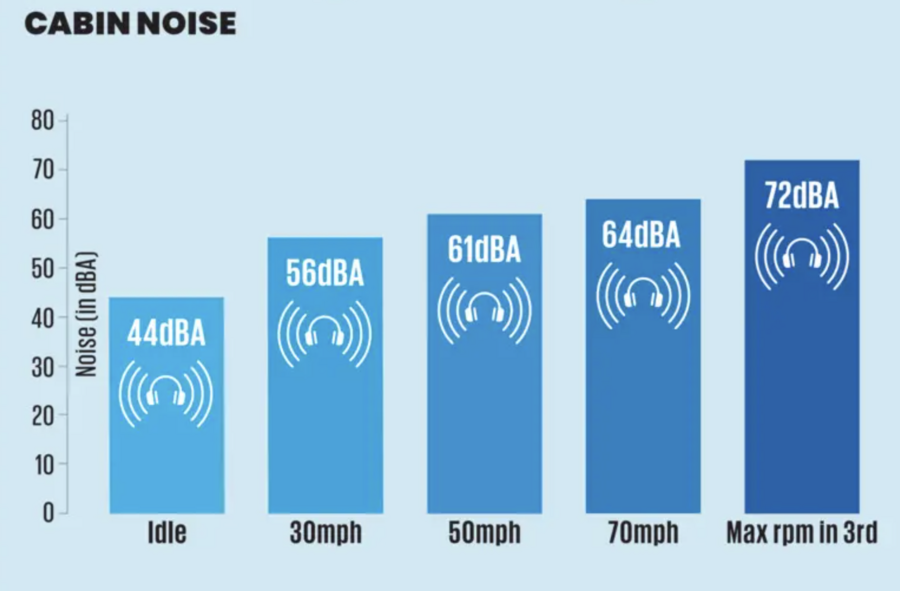
Electric-only performance does feel a little stronger than in Volvo’s old PHEVs, and the car will maintain motorway and brisk A-road pace more easily, without making you rouse the piston engine inadvertently. When you do, that engine runs in muted and fairly quiet fashion - moreso, certainly, than in earlier XC60s - although, still, it doesn’t really ever feel like it’s as powerful as the headline 455bhp power figure leads you to expect.
The car's touchscreen offers three options for managing the charge in the battery: Auto, Hold and Charge. Hold works as expected, but Charge is quite slow to replenish the battery. Auto is quite clever, because if you plug your destination into the Google navigation, it will use all of the electric power over the course of your journey but reserve some for sections in town or heavy traffic, rather than use it all at once.
We like how Volvo handles regenerative braking: D mode on the gear selector gives you freewheeling, while B engages a much stronger mode. On the touchscreen, you can toggle whether the car creeps forward from a stop when you lift off the brake pedal. Switching it off turns B mode into a full one-pedal setting.
We’ve not yet driven the mild-hybrid B5, but on paper it is quite a bit slower and, as acquaintance with the pre-facelifted version suggests, will feel like it's having to work harder much of the time, although we'll have to wait to drive the updated version to confirm this is still true. Quieter or otherwise, however, the B5's economy (at barely 30mpg) means frequent trips to the petrol station are necessary.

Despite pushing deep into premium car territory over the past decade, Volvo has never managed to strike an especially compelling ride and handling compromise; but that may very well be by design. And if it's the mission of an XC60 to be sufficiently pleasant, quiet, comfortable and easy to drive that you simply don't find much to remark on about the driving experience, it's a pretty successful effort.
Our test car rode on air suspension, which only top-level Ultra Pro trim models gets as standard but others can add as an option, 21in alloy wheels and winter tyres. It rode both motorway asphalt and town roads smoothly, and with good isolation.
The car weighs a little over 100kg more as a ‘long range’ option than it used to, but hides that bulk pretty well. It didn’t roll or heave noticeably on Danish country roads; although the nature of those roads isn’t a great match for what day-to-day motoring might be like in the UK.
Where the 2025 model was concerned, we found the ride on UK roads slightly hollow, while larger asymmetric inputs caused a rocking feeling. It wasn't so irksome that you couldn't get used to it – but did feel curiously unresolved.
The car has fairly slow, light steering with a smooth feel and linear responses, but filters feedback of any kind. This makes the XC60 a fairly distant driving experience, but an undemanding one.

The XC60 starts from a little over £50,000 for the mild-hybrid B5, or a whisker under £59,000 for the T6 Long Range PHEV, both in entry-level Core trim. The T8 powertrain is coupled to Ultra trim, bumping the price to a shade under £70,000.
That’s rather expensive, so we would just stick with a T6, since the extra power isn’t worth it. The 'long range' PHEV treatment has increased prices a little for the T6, but it remains broadly competitive with key rivals, and could be worth any extra outlay for the savings its longer-range electric running might be worth.

New Volvo XC60: Driving the UK's longest-range plug-in hybrid
Sometimes, continuing with an older model while rivals enter new generations can be an advantage as much as it is a handicap. The fact is, the XC60 still looks as sharp as it did in 2017, and its high-quality, simple-to-operate, understated interior should continue to give it the edge over the Audi Q5 and BMW X3 for some buyers.
As ever, there will be better-handling, more dynamic-feeling rivals than this for UK buyers to spend their company car allowance on; and these days, ultimately more practical ones, with seven seats and bigger cargo bays, too.
Nonetheless, the older it gets, the better the XC60 seems to represent Volvo-heartland calmness, comfort and pragmatic self-assurance. After all that, a ballpark eighty miles of real-world electric range probably feels like plenty - and more than most people need anyway.