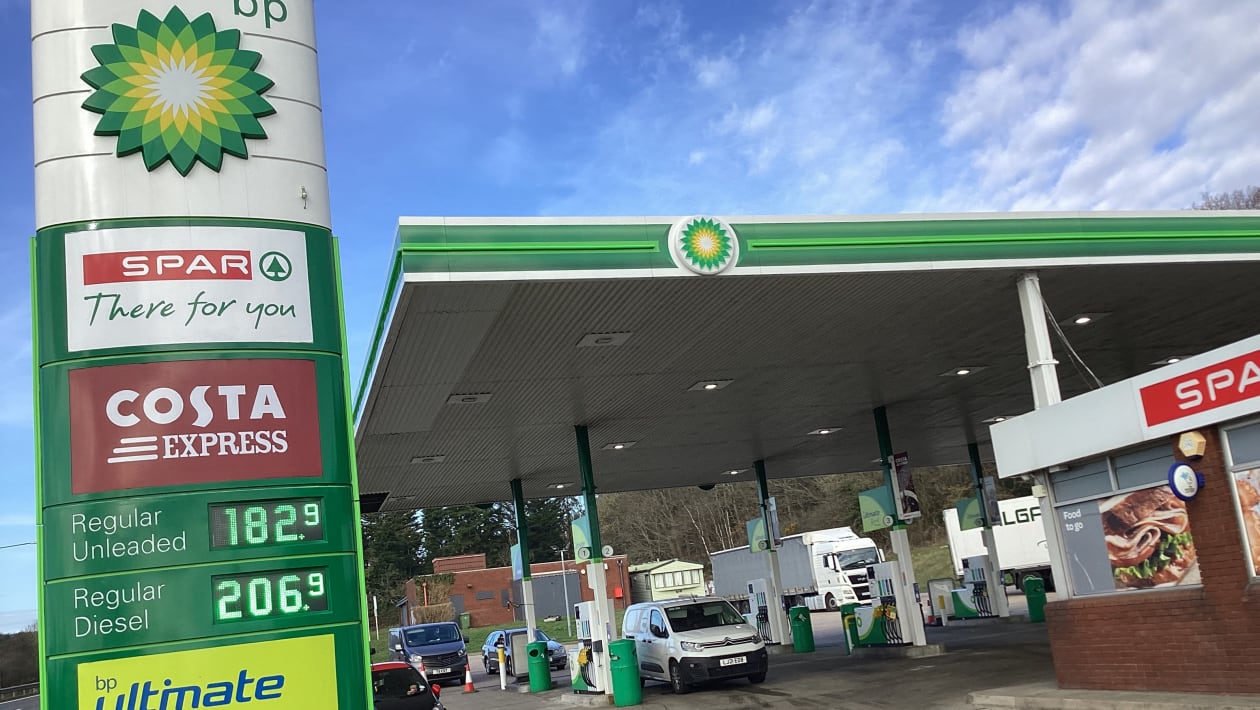
- The taxes imposed by the Government.
- The costs of drilling, refining and transporting.
- The profit margins for the fuel companies.
For petrol, diesel and biofuels, the Government gets around 60 per cent of the overall cost through fuel duty and value added tax (VAT).
The fuel duty represents the fixed price of fuel – it stays the same regardless how much overall oil prices fluctuate. Currently, the Treasury adds 52.95 pence to each litre of fuel through fuel duty – inclusive of the temporary 5p cut – and another 20 per cent through VAT. How much you pay in VAT depends on how much fuel you purchase.
The second biggest chunk comes from the wholesale costs of the fuel itself. The wholesale cost is a combination of currency exchange rates, global oil prices, and even domestic supply and demand.
Why is diesel more expensive than petrol?
Although diesel and petrol are taxed the same by the Treasury, historically diesel has been more expensive than petrol, as domestic refineries have struggled to meet demand. This has forced the UK to import diesel from other countries at a greater rate than petrol. In addition, diesel prices are pushed up by the cost of the additives that go into the fuel.
Furthermore, the gap between UK petrol and diesel prices widens during the winter. The end of the US “driving season” means retailers have a surplus of petrol they can’t export, so they sell it here at a lower price. Diesel demand, meanwhile, increases across continental Europe, where the fuel is commonly used in heating oil.
Recently, the influx of cheap diesel from countries like Saudi Arabia has turned the tide, swinging diesel wholesale prices closer to that of petrol, and bringing the pump price down with it. However the fact that we get a higher percentage of diesel from Russia than petrol means the advantage has swung the other way again.
Why are petrol and diesel prices more expensive in rural and remote areas?
Rural communities which are a significant distance from fuel terminals are more likely to experience higher fuel prices.
To try and combat high rural fuel prices, the Government provides a 5 pence per litre reduction on the standard UK rate of excise duty to fuel retailers in a number of specified rural areas including island communities like the Inner and Outer Hebrides, Northern Isles (Orkney and Shetland), the islands in the Clyde and the Isles of Scilly.
The rural fuel duty scheme also operates in 17 other towns in Scotland and England which have similar characteristics to those mentioned above, such as remoteness and high cost of fuel.
Don't miss out! See more of Auto Express in your Google Top Stories. Click here...