The last time we tested the Mokka Electric, it was in cold conditions, and it returned 3.8 miles per kWh, which would give a range of about 190 miles. A 100kW rapid charging speed is the same as the Puma, but well behind an EV3’s 150kW capability. Vauxhall’s quoted 30-minute rapid charge to 80 per cent is based on a starting point of 0 per cent, rather than the more typical 10 or 20. Charging from a 7.4kW home wallbox will take 7.5 hours.
| Battery size | Insurance group | ||
| Mokka Electric YES | 54kWh | 250 miles | 21 |
| Mokka Electric Ultimate | 54kWh | 249 miles | 24 |
| Mokka Electric GSe | 54kWh | 209 miles | 32 |
Insurance groups
The Mokka Electric should have similar insurance costs as its petrol equivalent since the EV version kicks off in the same insurance group of 21, and goes up to group 24 for the high-end Ultimate. The outlier is the high-performance GSE, which is in group 32.
However, that’s not too bad compared with the Kia EV3, which starts in group 34, while the decidedly not sporty Renault 4 starts in group 26. For an EV with a lower insurance rating, you’ll need the Ford Puma Gen-E, which is in insurance group 18.
Vehicle Excise Duty (VED) road tax is the usual £200 a year, while no version is anywhere near pricey enough incur for the government’s luxury car tax supplement.
Depreciation will be harsh, even as far as EVs go. According to our data, a Mokka Electric will hold onto just 32 per cent of its value after three years or 30,000 miles, some 11 per cent lower than the equivalent combustion Mokka and six per cent worse than a Ford Puma. The GSe model does much better, though, retaining 43 per cent of its original value over the same period.
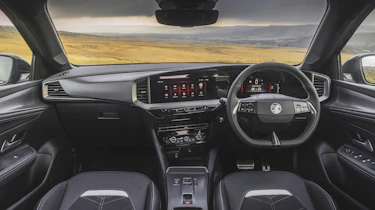
The Mokka Electric gets the same smart-looking cabin as the combustion version, which wins extra points for proper climate controls
|
|
Try to remember what the old Mokka looked like – we’ll bet you’ll struggle. It was a forgettable piece of car design, followed up by the much more stylish current model with its distinctive ‘Vizor’ grille. The Mokka Electric is virtually identical, differing only in subtle badging.
Interior and dashboard design
The previous-generation Mokka also felt pretty dour and bargain-basement inside, so it’s good to see the current car adopt a much smarter look shared across petrol, hybrid, and electric versions.
Materials and build quality
Material quality is a mixed bag, but we like that Vauxhall has resisted the lashings of scratch- and fingerprint-prone piano-black plastic that many manufacturers seem to favour, opting for a smart brushed-silver look instead. There are some harder, cheaper-feeling surfaces, but nothing too offensive.
Infotainment, sat-nav and stereo
Every Mokka gets a 10-inch touchscreen and 10-inch digital instrument cluster lined up side by side in what Vauxhall calls ‘Pure Panel’. The infotainment isn’t the most responsive system out there, and the layout could be better, but at least you don’t have to use it for climate functions, because you can control that using a row of physical controls sits below the screen. This contrasts with Peugeot, which makes you use the screen to do things like change the temperature, even though it builds its cars from predominantly the same box of bits.