Both cars make it easy to adjust the safety systems. The Golf has a main menu shortcut at the top of the screen, while the Kia has convenient controls on the multifunction steering wheel.
While it’s a performance model, the EV4 GT still carries Kia’s seven year/100,000-mile warranty, compared with three years/60,000 miles for the Golf, although VW does offer insurance-based extended warranty cover if you want it.
Kia’s pre-paid servicing package should offer better value than VW’s scheme, helped in part by the lower maintenance that an electric powertrain needs.
Electrification is sanitising the new-car market, and the hot hatch sector in particular could really do with an injection of thrills to attract buyers. The Golf R’s potent petrol engine isn’t the most tuneful around, and the twin-clutch gearbox doesn’t give you the same connection as a manual, but these mechanical elements help it to feel more engaging than any of the EV4’s simulated electronics.
Add in the fact there’s less weight for the 2.0-litre engine to haul around, plus a chassis that has a broad range of ability, and the Golf R proves that there’s still life in the high- performance petrol hot hatchback formula.
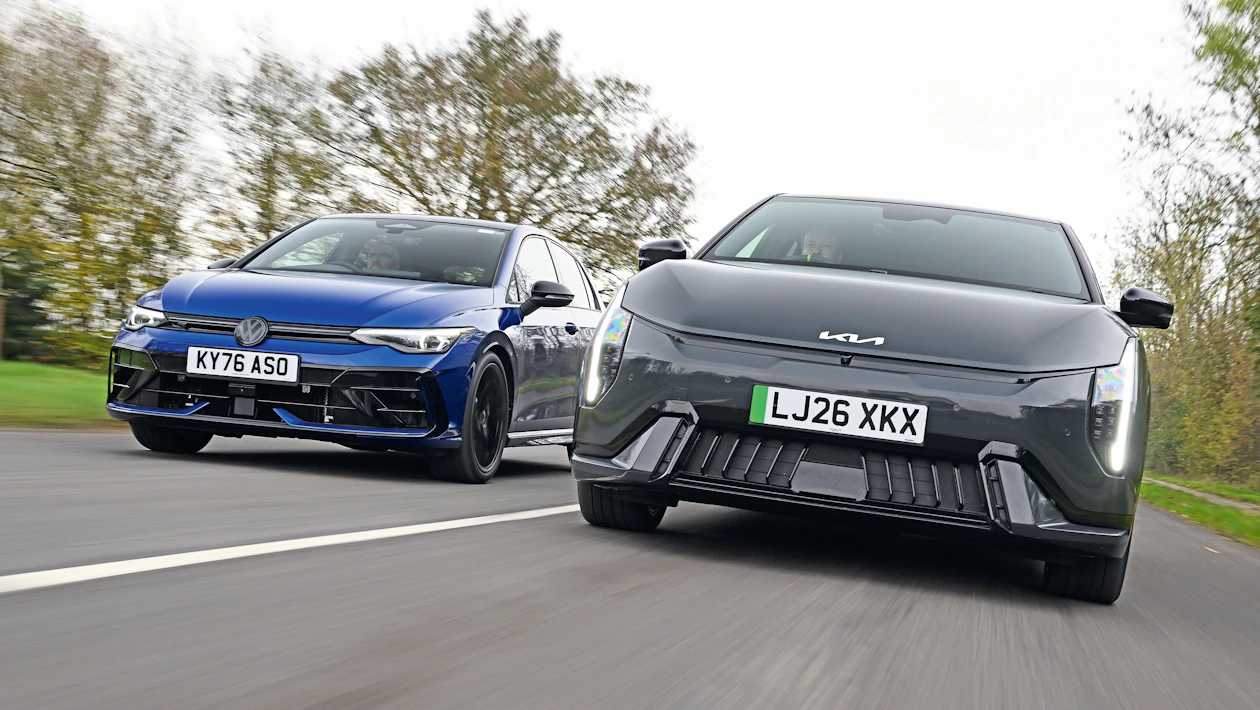
While the Kia EV4 GT is a quick and competent EV, it doesn’t have the fun factor to put it ahead of the Golf R. It suits the GT badge well because it has accessible performance and everyday usability, and it’ll be a great option for those in need of a fun car with low running costs, but the weight of the battery blunts its agility.