


It was probably fate for the current, second-generation version of the , the vehicular embodiment of pragmatism and rationality, to steadfastly refuse to die. Why would it, after all, if it could still be useful?
From the Volkswagen emissions scandal to the UK Brexit vote, this Volvo SUV has lived through an awful lot in its near-12 years on sale. And now on it goes, receiving a new long-range plug-in hybrid powertrain in order to remain competitive on the latest Euro 6e-bis European emissions tests.
So can a large, premium-brand SUV now more than a decade old and counting really compete with so many much younger rivals?
Well, not everything about this car is quite so old, after all. Volvo gave the XC90 what amounted to a facelift of medium scope for the 2025 model year and reappraised its prices and equipment levels. There are fewer engine choices now than there used to be, but there’s also a more generous roster of kit and prices starting from well under £70,000 – for a car with seven seats and a whole lot else as standard.
So does this perennially popular big family car – a dependable 100,000 sales a year for Volvo every year since its production hit full swing in 2016 – still have tangible selling points? Or do you have to be an old Scandinavian sentimentalist to see its appeal these days? Read on to find out.

New Volvo XC90: Long-range PHEV keeps 11-year-old SUV fresh

While the 247bhp mild-hybrid B5 AWD petrol version of the XC90 just keeps on trucking as the entry-level option pretty much exactly as we road tested it in 2025, there’s a new T8 PHEV at the top of the range for 2026. The T8 combines the same 2.0-litre turbocharged four-cylinder petrol engine as the B5 version with a couple of electric motors. Its primary motor sends up to 174bhp to the rear axle, and helps to make a claimed 455bhp of ‘system output’ peak power.
The big difference between this and the XC60 long-range PHEV, meanwhile, is that there’s no less powerful T6 version here. You can buy a lower-trim (Core or Plus) T8 instead, but it’ll still cost you more than £75,000.
You can have either dark or traditional ‘chrome’ brightwork on a range-topping Ultra model, as you prefer. Lower in the range, Core models get bright chrome, Plus models dark
It’s at this point that we’d normally run through so many minor ‘mid-life’ exterior design and material cabin alterations – and we might crack a joke about how they’d better not actually be ‘mid-life’ alterations because otherwise this car would have to live to be older than Moses, Methuselah, Teiresias and all of the surviving Rolling Stones put together.
But maybe Volvo saw that coming because there aren’t any exterior design or cabin trim alterations to report for the 2027-model-year version of the car. None. This is a facelift without any cosmetic nip-and-tuckery whatsoever (there was a fair bit last year, you may remember). All they’ve really done is add Google Gemini AI voice recognition to the latest software on the 11.2in multimedia system.
Going back to 2025, however, the car did get the usual headlight and bumper tweaks. It gained a new bonnet, subtly reprofiled and with a revised shutline at its foremost edge too. That closed adjacent to new, slimmer headlights, and above new radiator grille and front bumper designs. So, even at the end of 2026, the car still looks surprisingly fresh.
Technically, the XC90 continues on Volvo’s SPA platform and has a monocoque chassis made mostly of high-strength steel, augmented with aluminium in places. Its dimensions make it just under five metres long and 1.8 metres tall, and so just a little less bulky at the kerb than some seven-seat rivals such as the Audi Q7 and Land Rover Defender 110.
Buyers are now offered an entry-level, mild-hybrid B5 AWD option, and the new T8 Long Range AWD Plug-in Hybrid at the top. The B5 employs a Haldex-style electronically controlled all-wheel drive system, and the T8’s four-wheel drive is delivered via 'P4'-hybrid-style electric rear-axle drive. The B6 petrol and B5D diesel options of the pre-facelifted car were discontinued in 2024.
So far we've tested a B5 AWD in the UK (which generated all of the road test results that this article contains) and a T8 PHEV in mainland Europe.
The T8 Long Range PHEV offers a peak system power output of 455bhp, up a little on its predecessor thanks to a more powerful primary electric motor. Battery capacity jumps up to just over 40kWh, however, and electric range rises to a maximum WLTP EAER claim of 100.7 miles (depending on trim level). None of the car's seven-seat SUV PHEV rivals really even approaches that.
For suspension, the XC90 retains the axles it has used all along – double wishbones up front and multi-link at the rear – with base models resting on coil springs at the front and Volvo’s transverse composite rear leaf spring; and Ultra models getting, as standard, the adaptively damped air springs with which lesser models can be fitted as an option, which can add 40mm of ground clearance when required.
The car's standard coil springs were retuned for 2025 and new frequency-selective passive dampers added for a gentler but better-controlled ride.
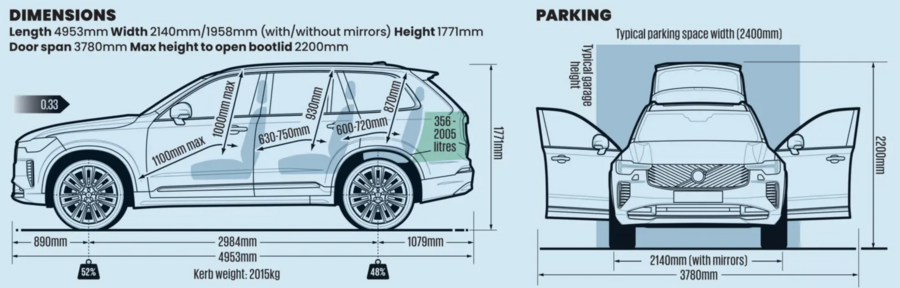


The XC90’s seven-seats-as-standard approach to life in the large SUV niche is likely to go down well with its core clientele. There are two key points to note about its passenger versatility. One, you get those seven seats irrespective of powertrain choice. (In an equivalent Defender 110, Q7, X5 or GLE plug-in hybrid, the hybrid system packaging rules out a third row of seats.) Two, in the B5 AWD version, you get seven seats and a space-saver spare wheel.
The XC90’s second-row seats are three individual chairs rather than being split 60/40 and each reclines and slides fore and aft by 120mm to give the option of creating more available leg room for those in row three or making extra boot space. The way the second-row chairs tilt and slide forwards makes accessing the third row reasonably easy for passengers, but some remote release buttons would certainly make putting those extra seats up easier when you’re standing at the car’s boot opening.
Cut-glass gear selector, from Swedish glassware maker Orrefors, is a feature of mid- and upper-grade cars. That it’s a good size and sited in an intuitive place pleases us most.
As for passenger space and comfort, the XC90’s third row remains suitable very much for smaller adults and kids only. Its second-row seats are roomier, if a little meanly padded by the standards of higher-end cars. Volvo’s option to convert the middle second-row seat, with its built-in booster cushion, for younger children, and then to slide it forwards so that it can be accessed more easily from the front row, is likely to remain a popular feature.
In the front, there’s plenty of refreshed digital technology – a new 11.2in portrait-orientated touchscreen console, for one (see Multimedia, below)) – and some crisper-looking digital instruments. But, barring some redesigned air vents, most of the fascia and secondary controls are familiar and unchanged – oversized audio volume button and twist-to-start engine start/stop knob included.
The front seats, like those in the rear, are a little thinly padded in places but offer lots of adjustment potential and commendable comfort in broad terms. Visibility is as good as you could want, with the potential to sit up high if you prefer. Perceived material quality and fit and finish are strong, with nothing looking cheap or antiquated.

Multimedia - 3.5 stars
The XC90’s new 11.2in portrait touchscreen is of the generation first seen in the EX30. Powered by Qualcomm Snapdragon processors, it’s claimed to deliver much better responsiveness than the old XC90’s smaller screen, as well as crisper, clearer graphics. And, as of th3 2027 model year, it also offers Google Gemini AI natural speech recognition.
There’s still no physical cursor controller so usability is entirely via the screen or voice command. The heater controls permanently occupy a portion of the display, expanding when you open them, and on the home screen, a quick reference ‘widget’ tries – but in our experience, doesn’t typically succeed – in displaying your most frequently accessed functions.
Like other Android-based systems, this one works well if you use Google-based apps on an Android smartphone. If you don’t, however, you’ll find functionality limited. (Our test car would mirror an iPhone only via a wired connection – not a great look on a £75,000 higher-end SUV).
The general usability of the system has improved a little since we sampled it in our EX30 road test. Volvo’s quick-access vehicle settings menu allows you to disable certain ADAS features, for instance, while a key on the left steering wheel spoke now permits one-touch deactivation of the speed limit governance buzzer.
We would still prefer some kind of physical cursor controller, either on the steering spokes or centre console, to allow scrolling around the system while only glancing down from the road. But Volvo’s system does seem to be slowly heading in the right direction.

There’s a certain simplicity and lack of frippery about the XC90’s B5 mild-hybrid petrol engine that makes it quite likable when it’s working at its laid-back best – even if, compared with the sorts of combustion engines that typically power cars like this, it can feel short of refinement and torque at times.
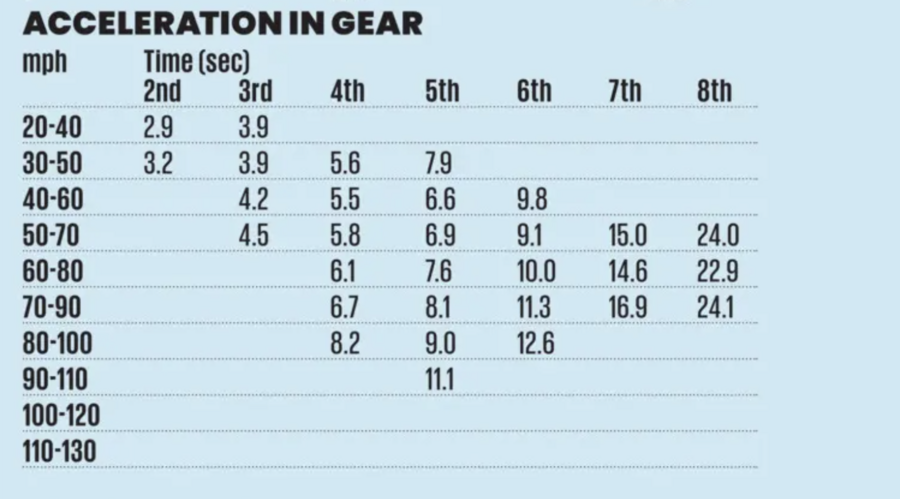
It’s a credit to the tuning of the car’s 48V hybrid system that it doesn’t tend to come up short routinely in typical day-to-day motoring. The XC90 has plenty of linear response under the first 50% of the accelerator pedal’s travel. You don’t need to dig much deeper into the pedal than that to move with the give-and-take of traffic flow, both in town and out of it. And it doesn’t seem to need to kick down through the ratios very often, either, in order to ease into gaps, climb gradients and generally keep its two-tonne mass moving along agreeably, which accords with the car’s wider relaxing character rather nicely.
The PHEV loses the underfloor boot space that the B5 has, so while mulling powertrains, consider if you want room for a space-saver spare wheel or not.
It’s what happens when you call for more that gives the game away about what this XC90 lacks: specifically, the 400lb ft or so of accessible torque that a multi-cylinder diesel might be able to summon when getting a hurry on.
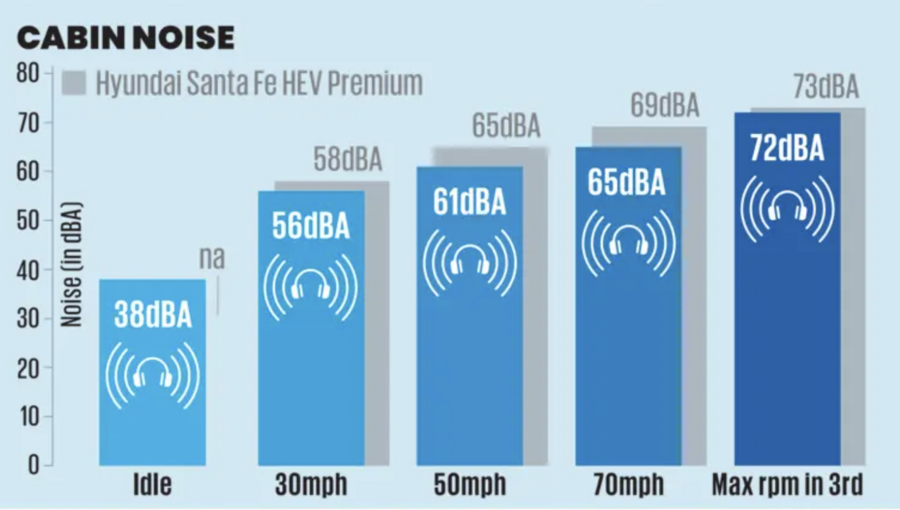
The 8.0sec 0-60mph time we recorded for the car looks respectable enough in isolation (though it’s still more than a second slower than an equivalent six-cylinder diesel might be). But subjectively, instead of holding a higher gear and simply grunting its way forwards, the B5 tends to rev a little harshly and fruitlessly beyond 4500rpm when you need speed. And the way the eight-speed automatic gearbox tends to delay and then grab at downshifts does little to add any sense of big-car assurance.
The car’s mechanical refinement is quite good at a cruise, but less good when the engine has just started from cold or is laboured.
Measured braking performance, on the standard-fit Continental PremiumContact 6 tyres, was also good, with no evidence of fade.
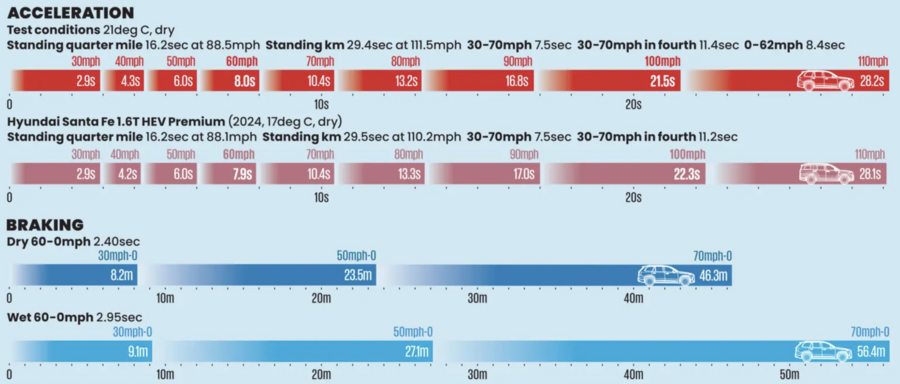
The XC90 T8 Long Range PHEV model, meanwhile, should be gentle and mostly agreeable company pretty much wherever you happen to drive it. It's particularly quiet and relaxing in EV mode and a little easier to keep in that mode than was its predecessor thanks to Volvo's bigger battery and more powerful drive motor.
The car's weight does seems to ask notably more of the new hybrid powertrain than is expected of it in the equivalent XC60, however, so the car's electric-only performance doesn’t quite have the same air of assurance as its smaller sibling commands. There are times when electric oomph feels just a little bit meagre, if only on the motorway, and when the combustion engine starts and runs, the combustion engine can sound just a little bit noisy at times.
Outright performance is strong enough, but the car just doesn't feel quite as effortless to drive as its smaller, cheaper sibling, which seems like an odd inversion of the normally accepted pecking order.

The XC90 is much the same softly sprung, comfort-focused big family car now that it always has been. We’ve yet to test one on standard suspension on UK roads, although that version did impress us for comfort and isolation on its 2025 launch in mainland Europe. Both of the test cars we've driven since have had Volvo’s air suspension and Four-C adaptive dampers instead, as well as the 21in wheels that come with Ultra trim.
The car’s operating regime is simplicity itself. Just as there are no paddles for gear selection, so there are no driving modes as such, apart from the Offroad mode, which we’ll cover in a moment. However, you can independently select ‘soft’ and ‘firm’ modes for the suspension and steering through the touchscreen.
The ride of the air-sprung B5 model is generally settled, quiet and absorbent with the suspension left in ‘soft’, as you’d want it to be. It soaks up longer-wave inputs well and without letting the body control loll or pitch, although short, sharp inputs do sometimes crash through the shock absorption in a way that would seem to make smaller, lighter wheel rims a smarter option.
The car doesn’t really seek to hide its size or mass, either on a flowing country road or when negotiating a tight car park. There’s no four-wheel steering tech here or active anti-roll control, just a medium-paced steering rack and a chassis with respectable mechanical grip levels but little agenda to engage or entertain. Instead, it feels much more interested in being transparent, consistent and straightforward – and takes little effort in the understanding.
Some might call it a touch stolid and dull, others just pleasant, reassuring, easy company. Either way, it’s classic Volvo dynamic playbook stuff.
The T8 PHEV weighs almost 200kg more than a like-for-like XC60, though, and about 340kg more than the B5 – and it feels like it on tighter country lanes, where the car rolls and heaves a little, and needs a moment to settle on a cornering line. The XC90’s never been an SUV to hurry, but this one definitely isn’t, and its 455bhp of peak power certainly shouldn't allow it to be confused for a sporting prospect.
The XC90 doesn’t trade on a particularly rugged sort of off-road capability. It doesn’t offer low-range gearing or locking differentials. Moreover, our B5 test car came on road-biased Continental tyres that anyone who expected to do regular driving on wet grass or mud would be well advised to swap for something more dual purpose.
It generated a fair amount of traction on level gravel but struggled more on mud and through ruts, leaning a lot on its traction control. Even in Offroad mode, which hikes the XC90 on its air springs to exceed 250mm of ground clearance and recalibrates its powertrain and ESC, the car felt a little short of wheel articulation when dealing with mogul-style asymmetrical bumps, although it completed MIRA’s ‘nursery slopes’ off-road course without grounding out or grinding to a halt.
One slight annoyance is that the car automatically deselects its Offroad mode when your speed exceeds 25mph, returning to its standard ride height without warning. So once you’ve selected it, you need to be vigilant to check that it’s still engaged.

Volvo’s sub-£70k entry price for Core-grade XC90 B5s may help to keep buyers interested, once they discover that a rival Audi, BMW, Land Rover or Mercedes is likely to cost them around £10k more – and more still in like-for-like form. The T8 PHEV starts from around £75k.
Volvo includes seven seats as standard – heated in the front and for the outer middle-row ones – as well as four-zone air conditioning and matrix LED headlights. Air suspension and premium audio start to be introduced on mid-grade Plus models, in some cases as options. The cheapest air-sprung PHEV would just about tip over £80k.
There aren’t Isofix points on all three second-row seats but Volvo’s built-in middle-seat booster makes up for that. You could put winged child seats in the outer seats, stagger their positions relative to the middle one, and make three toddlers very comfortable.
For real-world electric range, meanwhile, our testing suggested that the T8 ought to be capable of around 60 miles at mixed motorway speeds rising to 75 miles or so at lesser urban speeds. For a PHEV this practical, that’s exceptional electric-only running potential, and it makes this car quite rationally appealing.
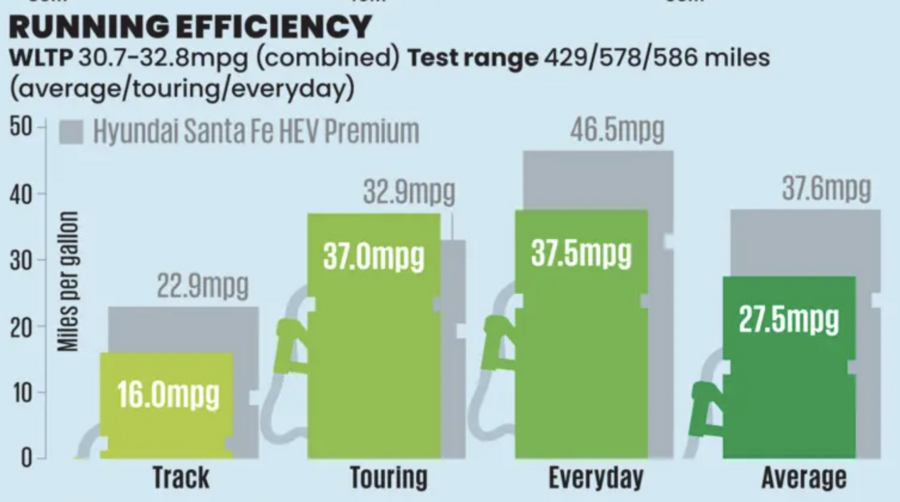
The B5, meanwhile, is about as economical as you might expect a two-tonne, 2.0-litre turbo petrol family SUV to be – which is to say not very. That it recorded a marginally better ‘everyday’ efficiency loop test result than its ‘touring’ one (average test speeds of 35mph versus 65mph) suggests that Volvo’s 48V hybrid system is indeed worth its place in urban motoring. In mixed daily use, we’d expect to see low-30s to the gallon, so you’d get better from a full hybrid and also marginally so from an equivalent diesel although possibly not by enough in the latter case to make it worth paying 10p a litre more for the fuel itself.

New Volvo XC90: Long-range PHEV keeps 11-year-old SUV fresh
The market for big, upmarket family cars is very different today from the one that the second-generation XC90 emerged into in 2015 – and yet this car still deserves a place in it, and is working pretty hard to justify it.
It’s a more hemmed-in arena than it used to be, and the XC90 has more of a bit part to play, granted. If global car buyers had, over the past five years, adopted EVs with more unbridled enthusiasm, Volvo probably wouldn’t be where it is now: with two seven-seat, full-sized SUVs on sale.
And yet, for people hesitant that an EV can meet the transportation needs of their family with the same nonchalance as a fossil-fuelled XC90 can, the old-stager’s reprieve is well earned. It isn’t especially desirable, capable or tough, and it won’t entice or excite. It’s simply a big, functional, usable and pleasant car – and now comes with all the lures of a really meaningful electric range, and the running cost savings that can bring in a family PHEV.
The second-gen XC90 will richly deserve its retirement when it does come - and a Viking funeral, to boot. It's got a part to play, for a limited time, until then, and plays it hearteningly well. But let's hope that it's put out to pasture before the car’s many more years older – and well before age takes the shine off the memory of a great servant of Volvo.