We’ve listed the earliest, generally-agreed timeframes in the table below.
Types of classic car
| Years covered | Example models | |
| Veteran car | Pre-1905 | |
| Edwardian car | 1905 to 1918 | |
| Vintage car | 1919 to 1945 |
Is there an official definition of classic and vintage cars?
There’s no official definition of a vintage car but there are actually two definitions of classic car, depending on which Government agency you listen to.
According to HMRC, a car is officially classed as a classic once it reaches 15 years of age. This rule only applies to company cars, though. Specifically, company cars that are worth more than £15,000. Once a car reaches this age, HMRC will calculate the applicable Benefit-in-Kind (BiK) tax according to its current market value rather than the list price. The 15-year age qualification means models from the 2000s are officially ‘classic cars’, but these are very much ‘modern classics’ and very few company car drivers are using vehicles of that age anyway.
The DVLA’s definition of a classic car is different. This one applies to a vehicle that was either built or originally registered more than 40 years ago. There’s no official ‘vintage car’ classification, but this rule does mean that the vast majority are exempt from VED road tax and MoT testing due to their age. Of course, you can still opt for an MoT check if you’d like an inspection for safety and maintenance reasons.
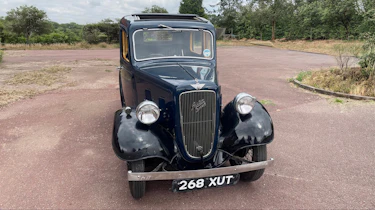
What are the pros and cons of owning a vintage car?
When you’re looking at a car of this age, it’ll inevitably suffer from a few foibles. Remember, many years and miles will have passed, so even the most mint condition cars will need tender loving care in order to look their best. However, said tender loving care comes at the cost of both time and money, so it’s important to weigh up the pros and cons of vintage car ownership before making a commitment. We’ve listed some of the biggest pros and cons below.
| Veteran cars |
|
|
| Edwardian cars |
|
|
| Vintage cars |
|
|
How much does it cost to run a vintage car?
The cost of owning and running a vintage car can vary wildly from model to model.
As with any car, fuel costs will vary considerably between models. For example, a tiny Austin Seven will be far less thirsty than an original Rolls-Royce Phantom. However, virtually all vintage cars need to be filled up with premium E5 petrol rather than regular E10, as the high ethanol content of the latter can cause the premature wear and failure of fuelling components. You may also need to use a lead additive.
Repair and maintenance
Sourcing parts can be another cost that varies significantly. Some of the more popular vintage models have specialists that still make and distribute parts to this day, so they’re pretty affordable. However, sourcing components for some of the rarer and lesser-known models can feel like a treasure hunt, and these spares can command serious money.
It’s strongly advisable that you have at least a modicum of mechanical know-how if you’re contemplating a vintage car of your own. At the end of the day, these are very old machines, so they’re going to misbehave and break down from time to time. Again, repair and maintenance costs can vary substantially between models. Be sure to carefully research the complexity of your dream vintage car, along with parts availability. Simplicity with an abundance of spares is the formula for saving money.
The general consensus among insurers is that vintage cars aren’t going to be driven often or fast, and they’ll almost certainly be cherished and locked away securely. Therefore, specialised vintage car insurance policies can be notably cheaper than those that cover modern cars. As always, your own circumstances and the car itself will cause quote variations, but you could potentially be pleasantly surprised.
Every vintage car, even the very fanciest ones, does come with one shared cash-saving perk, though. At the time of writing, every car built before 1 January 1986 is exempt from the VED road tax. However, you will still need to register this exemption with the DVLA if you want to avoid any penalties.
To apply for the exemption for the first time, you’ll need to visit a Post Office with your V5C or V62 document in hand. You will also need to renew this exemption annually, just like you would when paying the VED road tax. You can renew the exemption online.
Get the latest car news in your inbox, for FREE! Sign up to the Auto Express email newsletter...