Straying over the limit picked up by the car, whether it’s right or wrong, will usually result in both a visual and audible warning. As with ELK, speed assist must default to on when the car is restarted and cannot be deactivated with a short, single button push. The nature of the alerts is crucial here, in some cars the warnings are loud and intrusive, others are better judged and allow you to manually adjust the volume.
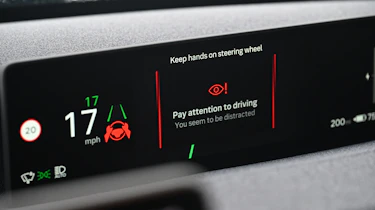
Usually referred to as ‘driver attention monitoring’ by manufacturers, this system normally uses an infrared camera either in the rear-view mirror, the instrument cluster, the top of the steering column, or the windscreen pillar. Some cars will use two cameras.
More basic systems merely check where your face is pointed, but the fanciest setups are also able to track your eye movements. If necessary, the car will provide an audible and visual warning telling you to pay attention to the road.
Again, how well this tech works can vary wildly from car to car. In some cases, the warnings will usually only sound when they arguably should. In others, we’ve had multiple alerts on short journeys for little reason, while some systems will sound for even the briefest look away from the road to use the infotainment system. We’ve also found issues with drivers wearing glasses where the technology thinks they are looking away from the road when they aren’t.
Mandatory on all cars sold since 2022, Autonomous Emergency Braking (AEB) uses sensors and, in some cases, cameras to detect obstacles ahead. There will usually be a visual warning, sometimes joined by an audible warning, before the brakes are automatically applied if the car deems it necessary.