Aquaplaning predominantly affects the front wheels because the rears are usually following in the drier tracks left by the front tyres. This means that steering inputs will have no effect and, because a car's brakes are biased to the front, much of the braking capability will also be lost. The drive will also be affected if you are in a front-wheel-drive car. If all four wheels are separated from the tarmac because of aquaplaning, you have lost control of your vehicle.
What to do if aquaplaning happens?
For those who have not experienced aquaplaning, it will take a second to realise what is happening. The telltale signs are the engine revs spiking (due to the reduced resistance required to make aquaplaning wheels rotate) and the steering becoming much lighter (again, due to less force being required to turn the wheels).
As in so many situations, the worst thing you can do is panic. Mashing the brakes and twirling at the steering wheel will have little effect and could land you in far worse trouble if your car suddenly regains contact with the road.
The best course of action is the following: first, if you’re using cruise control, turn it off at the switch rather than using the brakes, because stepping on the pedal may upset the car’s balance and send you into a spin. Next, gently lift off the throttle; when you aquaplane, your car is essentially a runaway train, so it’s best to let it slow down naturally. When you feel the tyres bite at the road and regain traction, you can then slowly apply the brakes – and don’t forget to breathe!
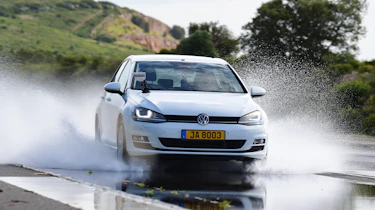
If your car does not slow sufficiently to regain control or you are approaching a corner, there is very little you can do aside from keep trying the steering and brakes, ensuring each time you are gentle and smooth.